The much-anticipated decision in Aldi’s appeal of a 2024 finding that the packaging of its private-label MAMIA Baby Puffs infringed the copyright of its rival Little Bellies (which we reported on last year) has now been delivered, with mixed results for Aldi.
The Full Federal Court found that the primary judge (Justice Moshinsky) had erred in considering similarities in an abstract list of features to determine infringement, as opposed to conducting a side-by-side comparison of each copyright work and the relevant impugned work.
The Full Court reconsidered the question of infringement by comparing the works side-by-side to identify the similarities and differences and assessing the originality of the similar elements taken.
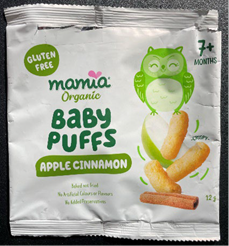
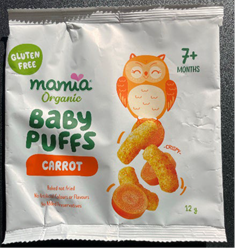
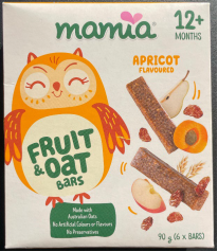
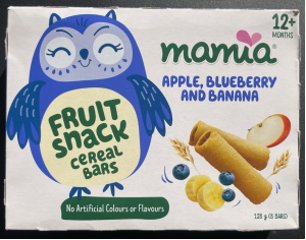
The Full Court found that Aldi infringed the respondents’ copyright in the front-of-pack artwork used on their ‘Bellies’ range of children’s snack products. Infringement was established in relation to the packaging of 5 of the 11 products in the Aldi MAMIA range (in contrast to 3 of 11 at first instance). However, each infringing work was found only to have infringed 1 Bellies work (in contrast to each infringing product being found to infringe 3 Bellies works at first instance).
This decision provides guidance for both brand owners and their competitors on how copyright infringement is assessed in these so-called private label ‘dupes’ cases.
A quick recap: what happened in this case again?
The respondents, Hampden Holdings I.P. Pty Ltd (Hampden) and Lacorium Health Australia Pty Ltd (Lacorium) own copyright in nine artistic works comprising the front-of-pack artwork for the BABY BELLIES, LITTLE BELLIES and MIGHTY BELLIES ranges of children’s snack products (Hampden Works) sold by Every Bite Counts Pty Ltd (EBC). Hampden is a related IP holding company that licenses IP to EBC. Lacorium provided design services to EBC in relation to products sold under the Bellies brand and was joined as an applicant during the course of the proceedings given its ownership of copyright in certain copyright works in dispute.
In 2017–2018, the packaging was redesigned by B&B Studios, with the new look rolled out in September 2018.
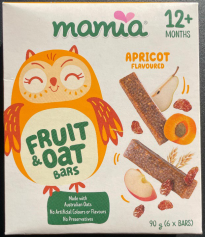
In late 2018 and 2019, Aldi engaged Motor Brand Design to redesign its MAMIA house-brand snacking range and expressly instructed the designers to use the Bellies brand as the ‘benchmark’ for Aldi’s packaging and to ‘follow the architecture’ of that packaging. Aldi’s MAMIA products began selling in the new packaging in February 2020, with further MAMIA baby puffs products launched in mid-2021.
Following a letter of demand in December 2021, Aldi made minor changes to its packaging, replacing its owl character with a monkey and altering the font. However, Hampden and Lacorium commenced an action for copyright infringement in February 2022, alleging that the artwork on the packaging of the Aldi snack products infringed its copyright in the Hampden Works (Aldi Works).
On 17 December 2024, Justice Moshinsky found that Aldi had infringed copyright in three of the nine artistic Works pleaded by Hampden. The Court established the requisite causal connection based on documentary evidence showing that Motor Brand Design had access to, and was instructed to emulate, the BELLIES packaging. Internal correspondence revealed Aldi’s designers were told the draft packaging was ‘too close to our benchmark’ and needed to be adjusted.
His Honour found Aldi had reproduced a ‘substantial part’ of three Hampden Works by replicating a combination of seven layout and design elements, including an oval-shaped cartoon character with a light-coloured belly, white background, two-column layout, rounded childlike font, and vertical photographic compositions.
The Court also held Aldi liable for additional damages on the basis of flagrancy, finding that Aldi had deliberately developed packaging that resembled a trade rival’s products for commercial advantage and continued selling infringing products after receiving a letter of demand.
Both sides appealed the decision.
What did the Full Court find?
Determining copyright infringement requires a side-by-side comparison
The Full Court (Burley, Moore, and Owens JJ) found that Justice Moshinsky erred in his approach to determining copyright infringement by:
- considering an abstract list of features of the Hampden Works and then determining whether they were present or not present in the Aldi Works, rather than by undertaking a side-by-side comparison of the similarities and differences in the packaging artwork; and
- failing to consider evidence as to originality when undertaking the analysis of whether a substantial part was reproduced.
For example, in considering the following pair of works:
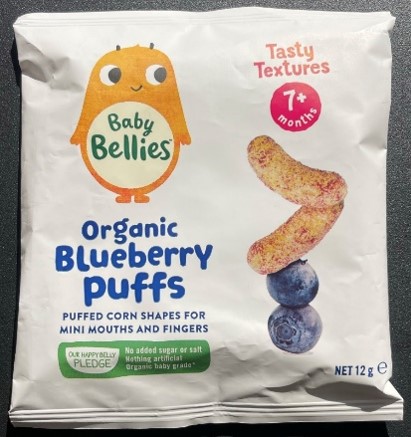
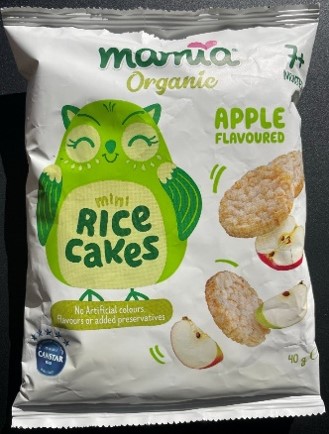
Justice Moshinsky found that the Aldi Work on the right did not contain the figure in the Hampden Work on the left because he abstracted the figure in the Hampden Work to describe it as a ‘small, oval-shaped cartoon character, with a large, light-coloured belly’ and then held that the figure in the Aldi Work was ‘much larger’. As the Full Court noted, ‘the cartoon figures thereafter played no further role in [Justice Moshinsky’s] infringement analysis, notwithstanding the presence of clear visual similarities, including the distinctive light-coloured belly with its writing, which his Honour said, … could not be considered separately.’
The Full Court held that this approach was incorrect. The belly with writing in it was part of the Aldi Work, and so required consideration as part of the overall assessment of whether a substantial part of the Hampden Work had been reproduced. The Full Court emphasised that:
‘[I]t is not just a matter of a feature being present or absent. Rather, the degree of similarity is important.’
Evidence of originality is key when determining whether a ‘substantial part’ has been taken
The Full Court also found that Justice Moshinsky did not properly consider the evidence of the originality of those aspects of the Hampden Works found to be objectively similar when undertaking the analysis of the taking of a substantial part. The Full Court found that his Honour assessed originality only impressionistically, engaging neither with the evidence adduced by Hampden as to the process of creation of the Hampden Works, nor the evidence adduced by Aldi as to whether certain aspects of the Hampden Works were common. The Full Court emphasised that a critical consideration of whether there has been a reproduction of a substantial part of the copyright work is the quality of what has been taken, including its originality.
‘Look and feel’ is not useful in determining copyright infringement
The Full Court also rejected the respondents’ contention that there was a single ‘look and feel’ shared by all of the Hampden Works, which Aldi had taken in each of the Aldi Works. The Court found this approach ‘unhelpful and distracted from the correct analysis’.
At [92], the Court accepted that layout and design can themselves be protectable expression, but cautioned that ‘look and feel’ is apt to mislead, emphasising that copyright protects the concept only to the extent it is represented by identifiable elements of expression reduced to material form. Generalising a common ‘look and feel’ across a range of differing works, they said, is more appropriate to a misleading or deceptive conduct analysis, not a copyright one (at [104]).
The Full Court’s re-determination of infringement
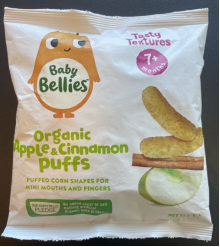
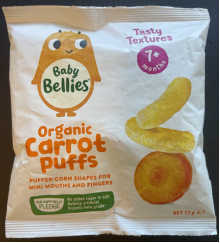
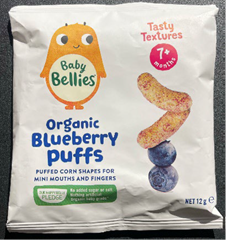
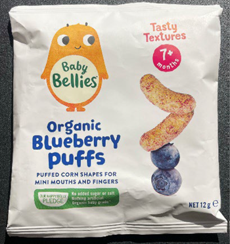
Rather than remitting the matter for a further trial, the Full Court re-determined infringement itself, comparing each Aldi Work against its correlative Hampden Work.
The Full Court undertook a comprehensive side-by-side analysis of the works to identify the similarities and differences between the works, and evaluated the originality of the similar features by reference to the evidence of the skill, effort and creativity involved in creating the works. The outcome of the Full Court’s redetermination, and the key points giving rise to each assessment, are as follows.
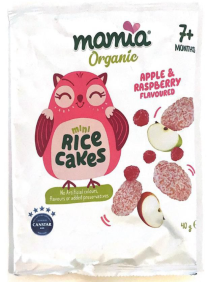
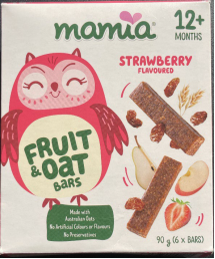
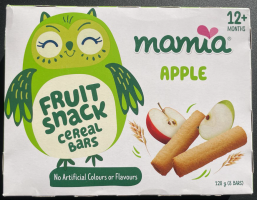
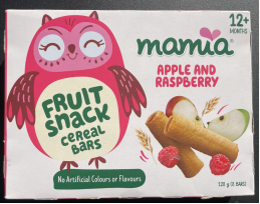
| Hampden Works | Aldi Works | Determination |
Item 1 |
Item 9 |
Infringing (substantial part reproduced) |
Item 6 |
Item 10 |
Infringing (substantial part reproduced) |
Item 7 |
Item 11 |
Infringing (substantial part reproduced) |
Item 1 |
Item 4 |
Infringing (substantial part reproduced) |
Item 1
|
Item 6 |
Infringing (substantial part reproduced) [199]–[202]: Analysis ‘somewhat similar’ to Item 4 [200]. Factors bringing this Work closer: blue owl matching the Hampden Work; photographs of blueberries; blue writing; more similar two-column layout [200]. Conversely, less vertical photograph arrangement. On balance, ‘largely neutral’ [201]; ‘(just) sufficient’ [201]–[202]. |
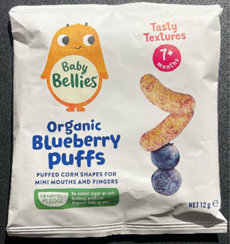
Item 1 |
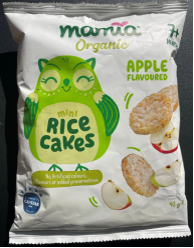
Item 1
Item 2
Item 3
Item 5
Item 7
Item 8 |
Not infringing |
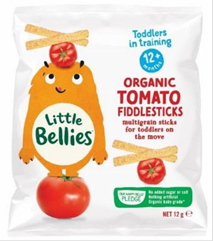
Item 3
|
Item 4 |
Not infringing [195]–[198]: Item 3 (Organic Tomato Fiddlesticks) lacked key features: the distinctive child-like font, the same layout (ingredients above/below character, green box on right not left), and pink in the upper right [196]. These differences ‘emphasise the flaw’ in Hampden’s common ‘look and feel’ argument [197]. |
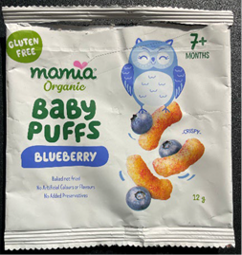

Additional damages
Moshinsky J had originally found that Aldi was liable for additional damages under s 115(4) of the Copyright Act 1968 (Cth). His Honour held that Aldi’s infringement was flagrant: Aldi deliberately developed packaging for the MAMIA baby puffs products that resembled the BELLIES products, seeking to use designs developed by a trade rival for its own commercial advantage. Although Aldi may have intended to avoid infringement, it ‘took the risk that its use of the BELLIES designs would exceed what the law allows’. Aldi also continued to sell the infringing products for months after receiving letters of demand.
On appeal, Aldi submitted that the primary judge erred in awarding additional damages including on the basis that Aldi’s benchmarking process sought to avoid infringing the law, and therefore was not about copying per se, and Aldi had no history of prior copyright infringements.
The Full Court upheld the award of additional damages, emphasising that the award of additional damages is a discretionary decision and referring to established authorities that the matters enumerated in s 115(4)(b) are not conditions to the award of damages but factors to be taken into account The Full Court endorsed the primary judge’s finding that flagrancy does not depend on an intention to breach the law and deliberately courting a risk while seeking commercial advantage sufficed.
Key takeaways for businesses
- Copyright remains a viable cause of action in lookalike packaging cases, but the case must be framed clearly: An abstract checklist of design features common to two sets of packaging is not sufficient to establish infringement; the impugned work must reproduce a substantial part of the earlier copyright work (assessed qualitatively) when compared side-by-side.
- Evidence of the design process carries weight: Since originality bears on the question of whether a substantial part has been taken, design briefs, iterations, and the designer’s own account are not merely background. Parties should expect to lead evidence in relation to the design process and originality of elements alleged to be taken.
- Consider pleading misleading or deceptive conduct: The general ‘look and feel’ of product packaging is not protected by copyright unless represented by identifiable elements of expression in a material form. ‘Look and feel’ may still be protected by an action under the Australian Consumer Law in circumstances where a consumer would be likely to be misled or deceived by a competitor’s product.
- Benchmarking a competitor’s packaging carries a flagrancy risk that can attract additional damages.
Featured image by Rudy and Peter Skitterians from Pixabay.